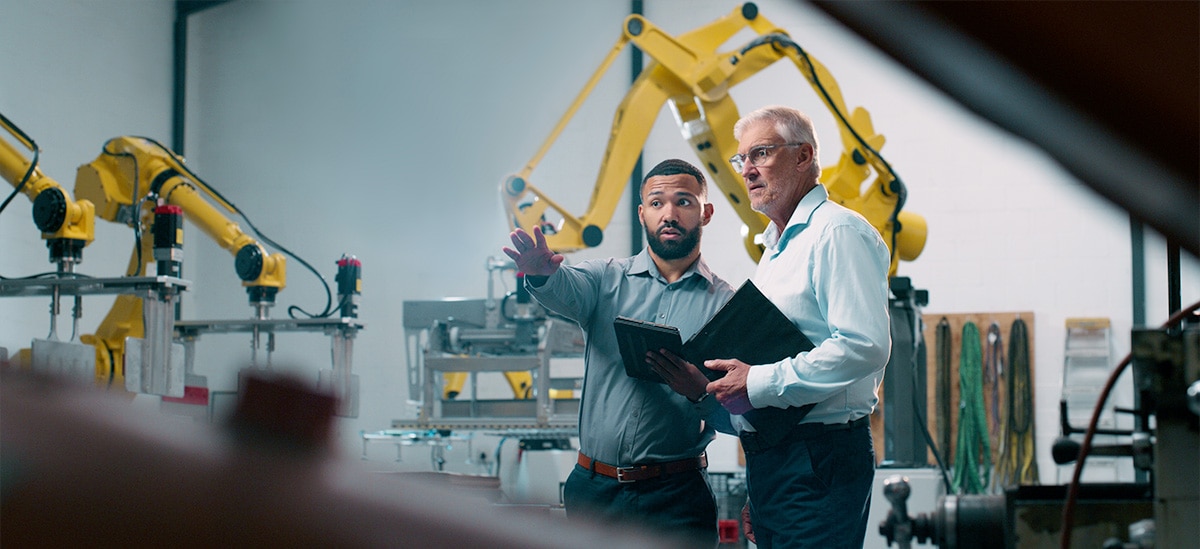
As the manufacturing industry faces challenges including inflationary pressures, skilled worker shortages, and supply chain disruption, companies are increasingly looking to leverage innovations in manufacturing technology in order to thrive and grow. Embracing technological advancements and inventive new techniques can help businesses improve their productivity, efficiency, and flexibility. This trend toward tech innovations holds true for manufacturing companies that are clients of PNC Bank.
According to Daniel Daigneault, PNC's Senior Vice President of Commercial Banking Markets and Equipment Finance, “PNC’s clients in the manufacturing industry are working smarter and striving to be more resilient in 2025, embracing technology and investing in machinery and processes to maximize their workforce, control supply chains, and increase efficiencies. PNC’s comprehensive suite of financing solutions streamlines equipment acquisition and offers the flexibility clients need to support and accelerate their business growth."
To help you navigate the rapidly evolving landscape of manufacturing technology, PNC has put together this guide to six trends in the industry.
Here are six trends in manufacturing technology that are transforming the industry:
1. Smart Manufacturing and Industry 4.0
Through smart manufacturing, automated equipment can now communicate with operators and other internet-enabled devices, removing barriers between digital, mechanical, and human processes. Manufacturers that use a wide variety of machinery in their operations, like those who produce plastic products, stand to see the biggest benefits from smart manufacturing.
The term “Industry 4.0” refers to the fourth Industrial Revolution (4IR), which began in the early 2010s, and encompasses smart manufacturing, machine learning, and cloud computing.[1]
Through the Industrial Internet of Things (IIoT), manufacturing machinery can send real-time updates on processes and predictive maintenance, as well as data analytics to improve efficiency, safety, and agility.
2. AI and Machine Learning
AI enables manufacturers to automate processes that have historically required humans to perform manually.
These are some of the ways AI is improving efficiency and reducing costs in manufacturing:
- Equipment monitoring: AI interprets data from onboard sensors for signs of overheating, component failure, and upcoming maintenance requirements.
- Quality control: AI vision systems inspect for defects with a high degree of accuracy, reducing material waste and warranty costs from returned items. AI-assisted quality control will aid manufacturers in industries with narrow error margins and tolerances, like pharmaceuticals and medical equipment.
- Process changeover: Rather than manually reprogramming machines to produce a different product, AI can automatically generate new instructions for every smart machine on the factory floor.
3. Supply Chain Resilience
In 2025, economic uncertainty has had wide-reaching effects on the manufacturing industry, with concerns stemming from tariffs, tax legislation, and international conflicts. However, advancements in AI and supply chain transparency solutions still offer promising growth potential.
The key to maintaining a resilient supply chain is maximizing visibility to predict supply chain vulnerabilities before they create disruptions. Digital supply networks help collect data throughout the supply chain, while generative AI tools can help analyze the data to anticipate delays and recommend solutions. At the same time, supply chain networks and AI can optimize traceability, which is especially important in the food and beverage industry.[2]
4. Sustainability
New AI models and smart devices allow manufacturers to collect detailed sustainability analytics for reporting requirements. Just as AI can identify workflow inefficiencies, it can also track opportunities to reduce emissions in both supply chain and production operations. Reducing supply chain emissions is especially important for industries like metal sourcing and tech manufacturing, which use raw battery materials and computer chips, which are resource-intensive to mine and transport.
5. Cybersecurity
Despite all the advantages of incorporating smart technology into manufacturing operations, integrating AI and connecting more equipment to the IIoT creates more opportunities for cyberattacks. Operational technology (OT) is more vulnerable to cyberattacks than information technology (IT). Thus, a successful cyberattack on smart manufacturing equipment can shut down production or even bankrupt a business.
Adapting cybersecurity to smart manufacturing vulnerabilities is crucial for manufacturers with government contracts, where a cyberattack could even pose a national security risk.[3] As manufacturers transition to more internet-enabled equipment, they must also increase their cybersecurity efforts organization-wide with ongoing training, firmware updates, and system isolation protocols to contain breaches.[4]
6. Advanced Materials and Manufacturing Technologies
In addition to software advancements, the manufacturing industry is also seeing innovations in the types of materials and production processes. Advanced materials include composites like carbon fiber, materials designed for harsh environments like extreme temperatures, and conductivity-enhanced materials.
The most prevalent advanced manufacturing processes are additive manufacturing (3D printing), near net shape manufacturing, and roll-to-roll manufacturing. Additive manufacturing has revolutionized the process of prototyping parts in the aviation industry, which previously took several months due to a multi-round treatment, and now, takes a few weeks.[5] Each of these processes makes manufacturing more efficient by reducing material waste and optimizing time and energy consumption.[6]
Making the Most of Manufacturing Technology
Embracing advancements in manufacturing technology can help manufacturers stay competitive in a constantly evolving industry. From smart manufacturing processes to machine learning, emerging technologies are revolutionizing how manufacturers operate.
"AI has helped us in communication in every area of our international company: translations, ideas and brainstorming, summaries, and increase of efficiency in daily operations," says Manuel Braun, Managing Director at Sortimo of North America. Braun added, "We are working on a couple of very interesting, dedicated AI projects."
Choosing the right technology to invest in can be an overwhelming challenge. That’s where an experienced advisor who knows the industry can help.
Let's Build Your Brilliant
PNC Equipment Finance can facilitate the lease or purchase of advanced technology and help take the complexity out of capital expenditures. Reach out to your relationship manager or visit pnc.com/ef today to find out more.