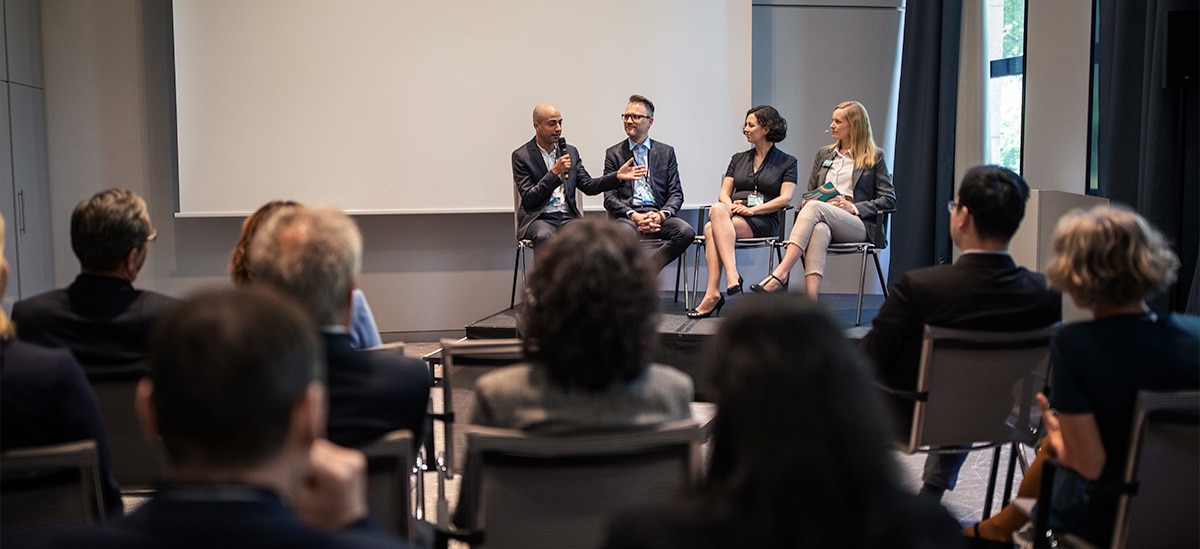
The Plan Sponsor Council of America (PSCA) National Conference is known for highlighting the unique challenges and opportunities facing plan sponsors and this year’s conference had many highlights. Summarized below are some of the most popular topics discussed.
1. Focus on employee wellness — using planning to help manage volatility
Early 2026 has seen significant market volatility resulting from a mix of economic conditions and geopolitical conflict. For the average retirement plan participant, this volatility created concern regarding budgeting, job security, investment safety and more.
The PNC Institutional Asset Management® (PNC IAM) team led a conference workshop session about retirement planning emphasizing that participant motivation is not static and engagement strategies must evolve accordingly. Based on their financial readiness and priority, participants are organized into three tiers—stabilization, personalization and optimization.
Early-stage participants prioritize liquidity and financial stability, while more advanced participants focus on personalized planning and ultimately tax-efficient income optimization. The key takeaway for plan sponsors and fiduciaries is to align education and guidance with participant readiness, rather than delivering a one-size-fits-all approach.
For participants seeking stabilization (Tier 1), the focus should be on foundational financial health, which directly supports long-term retirement outcomes. Recommended actions include offering workshops on loans vs. withdrawals, budgeting and debt management, along with short, targeted financial coaching sessions and digital financial health tools. Incentives can be used to drive engagement and savings behavior. From a fiduciary standpoint, this reinforces that improving short-term financial resilience (e.g., emergency savings, debt reduction) is a prerequisite to sustained retirement plan participation and increased deferrals.
For those seeking personalization (Tier 2), the strategy shifts toward more advanced planning tools and individualized advice. This includes access to one-on-one guidance, customized investment strategies (e.g., pre-tax vs. Roth decisions), advanced tax strategies, retirement readiness gap analysis and progress benchmarking. Fiduciaries should ensure their service model includes scalable personalization capabilities, supported by recordkeeper data and advisor engagement, to help participants translate general education into specific, measurable actions.
For participants in the optimization phase (Tier 3), the focus turns to retirement income planning, tax efficiency and wealth transfer. Recommended solutions include targeted communication on catch-up contributions, education about guaranteed income options, decumulation (i.e., post-retirement) and income modeling workshops and estate planning integration.
The fiduciary implication is clear: plan sponsors should help participants turn savings into steady retirement income, not just focus on accumulation. This reflects a broader best practice—aligning plan design, education and advisory services with the full retirement lifecycle.
We recommend: Plan sponsors should evaluate the financial education resources available through their advisor and/or recordkeeper and consider supplementing existing efforts to cover any gaps. Programs without an education strategy should consider implementing a program with a holistic focus on employee well-being.
2. Focus on investment — managing regulatory and fiduciary risk
A clear theme across workshop sessions was that fiduciary success in investment management is driven by process discipline, not outcomes. The Department of Labor’s proposed investment selection rule was central to these conversations. It reinforces that fiduciaries must consistently document the rationale behind every decision—why a fund was selected, retained or removed—not just the performance results. We believe this emphasis on process becomes the foundation of a defensible fiduciary framework, especially as regulators and courts continue to focus on decision-making consistency and documentation. Regular reviews of investment selection and monitoring practices, along with detailed committee minutes, are critical to demonstrate prudence and adherence to ERISA standards.
Litigation trends further underscore the need for rigorous oversight and governance of investment menus, particularly as plan design evolves. Recent cases highlight increased scrutiny in areas such as alternative investments within QDIAs. Where fiduciaries must prove not only that the investment is appropriate, but that the evaluation process was thorough and well-documented. Additionally, fiduciary decisions now extend beyond traditional investment selection—elements like forfeiture usage and broader plan design choices are being challenged, making it essential that committees align plan documentation with actual practices and maintain strong governance structures.
As investment menus expand, especially with growing interest in private markets, fiduciaries must adopt more sophisticated evaluation and monitoring frameworks. Private equity, private credit and other alternatives introduce additional complexities around liquidity, valuation, fees and benchmarking that differ from traditional public-market funds. Best practice is to establish a clearly defined due diligence process before introducing these options, followed by an ongoing monitoring framework that evaluates both performance and structural risks. Fiduciaries must also assess participant suitability, communication clarity and potential litigation exposure alongside expected returns.
Finally, strong fiduciary investment oversight increasingly requires a holistic and forward-looking approach to plan design and outcomes. This includes regularly reviewing the full investment menu including exposure to alternatives, evaluating optional tools such as managed accounts and considering if the plan should support participants in their decumulation phase . Even as new investment options and regulatory changes emerge, the core fiduciary mandate remains consistent: maintain a prudent, well-documented process, align decisions with participant needs and proactively manage evolving risks across the investment program.
We recommend: To stay on top of a changing regulatory and fiduciary risk environment, plan sponsors should collaborate with their advisors to make sure key investment decisions are well documented. Consider if it is time to revisit analysis around critical areas such as target date fund selection.
3. Focus on technology – managing workforce transformation
Against the backdrop of economic volatility, many conference sessions highlighted the increasing adoption of artificial intelligence (AI) across the economy. Our PNC IAM team led a keynote session on HR’s role in helping employees adjust to expected changes.
The core message from the keynote session was that AI is not just a technology change, but a workforce transformation. HR plays a critical role in helping employees adapt by providing tools, training and support. The discussion emphasized that the narrative should focus on AI as a tool for enhancing productivity, rather than replacing workers. Each employee’s needs will differ, so organizations must meet people where they are and help them understand how AI can save time and enable more meaningful work.
Recommendations to help employees adjust to the future of work included launching creative learning initiatives (e.g., events, training programs and learning labs), targeting high-impact use cases and fostering collaboration through internal forums where employees can share ideas. Clear communication and building a common language around AI are essential to reduce fear and increase adoption. The group also highlighted the importance of governance, including establishing guidelines, committees and safeguards around data privacy and cybersecurity. Finally, leaders were encouraged to start small—experiment with AI tools firsthand—and create safe environments for employees to learn, share and build skills that will be critical for the future of work.
Specific to retirement plan management, an increasing number of plan sponsors shared that they are using AI as part of their technology solutions for recording meeting minutes, storing and querying plan documents and more. Plan sponsors discussed the balance between easing administrative burdens and the potential risks associated with mistakes by both plan sponsors and AI.
We recommend: Consider if AI can be helpful in designing your transformation strategy. For example, ask AI to create an education plan for beginner, intermediate and advanced learning tracks. Think about whether this method could be useful in developing your workforce’s financial education or other fields where you’re working to increase employee knowledge.
Overall, plan sponsors are showing their dedication to fulfilling their fiduciary duties and commitment to improving the financial wellbeing of their employees.
If you’d like to put these recommendations into action for year end, please contact your PNC IAM representative to continue the conversation.