
Against a backdrop of ongoing uncertainty in financial markets and the global economy throughout the first half of 2026, PNC surveyed our clients’ defined contribution plan participants in group and individual education sessions to assess financial confidence across the country.
We asked participants two questions:
- Whether economic conditions were affecting how much they planned to save for retirement
- Whether they were planning to seek financial guidance (e.g., from an advisor).
The responses were striking.
Figure 1. The economy (e.g., rising costs) has affected how much I feel I can contribute to my retirement plan.
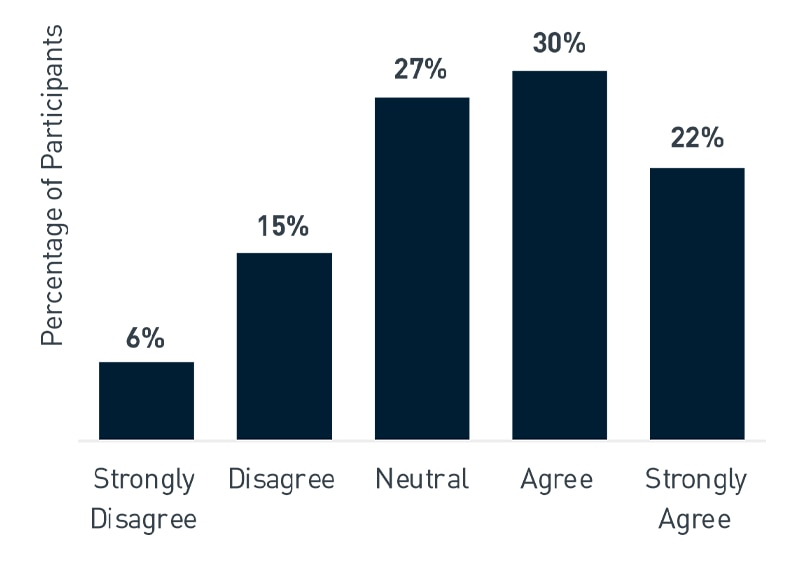
N=220 – Source: PNC survey of our clients' defined contribution plan participants January-June 2026
View accessible version of this chart.
Figure 2. I am planning to seek financial guidance because of economic conditions.
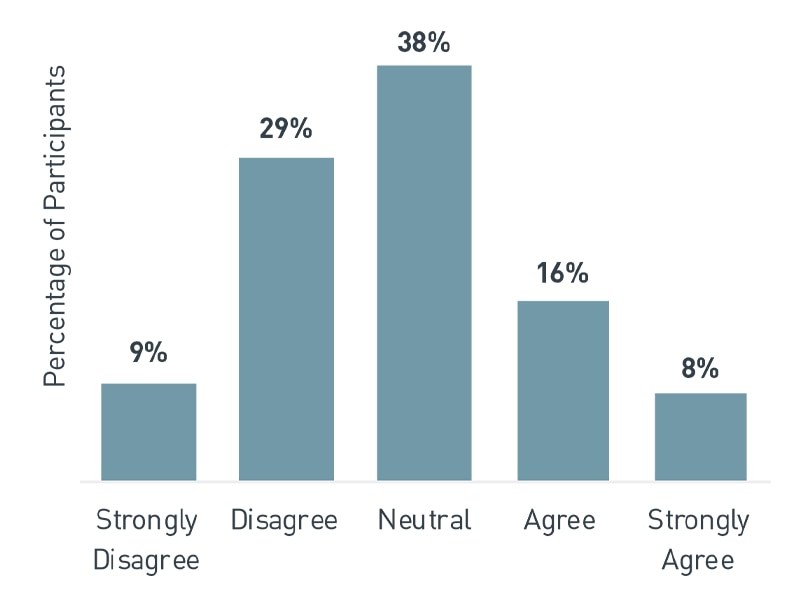
N=215 – Source: PNC survey of our clients' defined contribution plan participants January-June 2026
View accessible version of this chart.
More than 1 in 2 participants answered that they were considering or strongly considering reducing their retirement plan contributions. Fewer than 1 in 4 participants responded that they were considering seeking financial guidance, highlighting a meaningful gap between concern and action.
These findings are aligned with broader national data and trends. The 2026 Retirement Confidence Survey from Employee Benefit Research Institute (EBRI) found that worker confidence declined from 67% in 2025 to 61% in 2026, while concerns about inflation, debt, housing, health care costs and the future of Social Security and Medicare remained high.[1] Together, these data points affirm common participant concerns, including navigating volatile market conditions, financial stress and a growing need for personalized financial guidance.
Building on these responses, this article focuses on three areas where plan sponsors can make a meaningful impact on financial well-being and retirement outcomes.
1. Participants are seeking actionable, personalized guidance tailored to their unique needs and circumstances.
Educators continue to hear that workers understand the importance of saving for retirement, yet they are prioritizing current expenses as household budgets remain strained.
Participants don’t want general advice against this backdrop: they want answers that are specific to their household. They are asking our educators whether they should increase plan contributions, pay down debt first or hold additional cash given ongoing uncertainty. Many are trying to rebuild emergency savings, manage credit card balances, cover medical expenses or support both children and aging parents.
We hear:
- How much should I be saving at my age?
- Should I make Roth or pre-tax contributions?
- Am I invested too aggressively or too conservatively?
- How do I prioritize retirement savings if I am also paying off student loans or trying to rebuild emergency savings?
How Plan Sponsors Can Respond: Work with key vendors, including your advisor and recordkeeper, to identify resources for addressing employee questions. Given the personal nature of a strained budget, we have found one-on-one sessions to be the most effective in helping participants ask for help.
2. Participants often associate employee education with additional expenses
Participants may believe financial consultation comes with additional fees, such as those tied to comprehensive retirement or estate planning guidance. As a result, many choose to forgo this feature attempting to avoid added costs. EBRI reported that workers continue to lean on family and friends for financial advice, followed by online resources and research, and half of workers believe technology/AI will help manage their finances in the future.[2]
How Plan Sponsors Can Respond: Build communication strategies to highlight financial guidance resources available through the retirement plan and broader workplace benefits. One effective method is to encourage managers to remind their teams periodically of retirement planning and other benefits during team meetings.
3. Near-retirees prioritize income stability, financial security and retirement timing
Near-retirees need relevant guidance on decumulation topics such as retirement timing and income, expanding the conversation beyond accumulation. Their core concern is risk of outliving their retirement assets.
Generic education has limited ability to solve this concern. Individualized financial guidance can make a meaningful difference, as their situations are largely unique. Participants want someone to help them run the numbers: do they have enough saved for retirement and, if they need to close a gap, what it will take to get on track and by when.
How Plan Sponsors Can Respond: Consider building a strategy specific to the highly individualized needs of your pre-retiree population. Include a variety of delivery options ranging from a recorded webinar or brochure to promoting one-on-one financial education sessions via specialized communications focusing on common near-retirement concerns.
In summary, consumer confidence research and educator insights paint a clear picture of the current participant mindset. Workers remain committed to preparing for retirement amid financial stress, competing priorities and uncertainty about the future. Participants want education that reflects real-life decisions, acknowledges near-term financial pressures and helps identify the next steps based on their individual circumstances.
For plan sponsors, participant engagement strategies should continue to evolve and be reviewed for opportunities to better meet participant needs. Effective programs will likely combine retirement education with expanded access to personalized guidance that helps workers make decisions based on their circumstances. Plan sponsors can use these participant signals to refine their engagement strategy for the second half of 2026 and beyond.
For help with improving your retirement plan offering, please contact your PNC representative.
Figure 1. The economy (e.g., rising costs) has affected how much I feel I can contribute to my retirement plan. (view image)
| Response | Count | |
| Strongly Disagree | 14 | 6% |
| Disagree | 33 | 15% |
| Neutral | 60 | 27% |
| Agree | 65 | 30% |
| Strongly Agree | 48 | 22% |
| Total | 220 | 100% |
Figure 2. I am planning to seek financial guidance because of economic conditions. (view image)
| Response | Count | |
| Strongly Disagree | 19 | 9% |
| Disagree | 63 | 29% |
| Neutral | 81 | 38% |
| Agree | 35 | 16% |
| Strongly Agree | 17 | 8% |
| Total | 215 | 100% |