
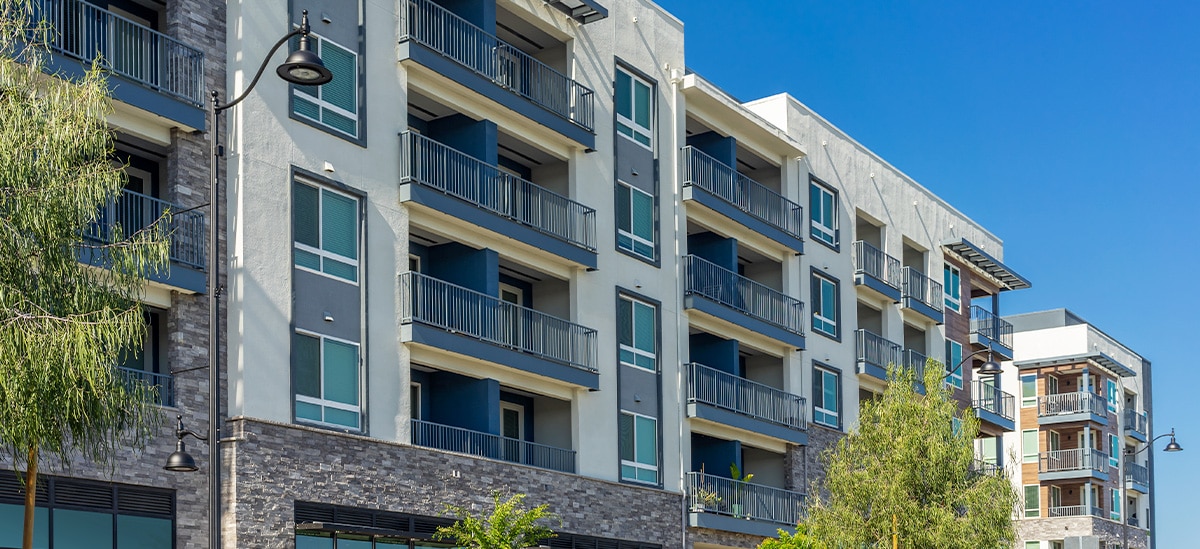
- Co-op housing (cooperative housing) is a type of property ownership in which buyers purchase shares in a company that owns a property, in exchange for the right to occupy a unit of the property. This is different from condo ownership, in which buyers purchase and retain ownership of individual units.
- Co-op housing is most common in expensive, densely populated cities like New York and Chicago, but may be found anywhere. Most co-ops are apartment-style buildings, but co-ops can also own communities of townhomes, manufactured homes, or stand-alone single-family homes.
- Co-ops can not be financed with a mortgage. They require share loans instead. And financial qualification does not guarantee a place in the co-op, as most co-op boards interview candidates and can deny applications for subjective reasons (as long as they do not violate Fair Housing Laws).
While homebuyers in big cities may be familiar with the idea of cooperative housing, which has been around since the 1800s, the concept is new for many Americans. And it’s often misunderstood.
This article will provide clear answers to some of the most frequently asked questions about co-op housing, including:
- What is a housing cooperative?
- How are co-ops different from condos?
- How is buying into a co-op different from buying a home?
- What are the pros and cons of co-ops?
By the end of the article, you’ll be ready to determine if co-op living might be the right housing choice for you.
What Is Co-Op Housing?
Co-op housing is a type of homeownership in which owners purchase shares in a company, called a co-op association, that owns or leases the property, rather than buying an individual unit in the property itself.[1] The number of shares an individual owns in the co-op typically correlates with the size, location, and desirability of their unit within the property.
When someone buys into a co-op, they receive a proprietary lease or occupancy agreement, which grants them the right to live in a specific unit for as long as they own their shares and follow the co-op’s rules. This lease is not transferable like a deed, but is instead tied to their status as a shareholder in the corporation.
Each shareholder in the co-op pays carrying charges to cover the property’s expenses, including a mortgage (if the building is not leased or owned free and clear), property taxes, insurance, and maintenance. Utilities may also be included.
The co-op’s shareholders elect a board of directors to oversee building operations, enforce the rules, approve new shareholders, and make decisions about repairs, upgrades, and budgeting.
Co-op housing is most often found in large, densely occupied cities like New York and Chicago, but can exist in any market.
How Co-Ops Became So Common in Areas Like NYC
Entire buildings of renters in the late 1800s got tired of paying rising rental rates without building home equity or having any control over the building’s management. So the residents of a building pooled resources to form a business entity that would purchase the property, allowing them to all remain in their units, build equity in the property, and make decisions about the building together.[2]
Types of Co-Ops
Co-ops are often multi-unit buildings, but they can also be communities of townhomes, manufactured homes, or stand-alone single-family homes.
The structure of the co-op arrangement can also vary. Here are the three most common types of co-ops:[3]
- Market-rate co-ops. Shareholders can build equity and sell their shares to an approved buyer at market value, potentially earning a profit.
- Limited-equity co-ops. There are restrictions on how much a shareholder can sell their shares for, favoring long-term affordability over profitability. These affordable co-ops are often backed by nonprofits, government programs, or housing advocacy groups.
- Leasehold co-ops. The co-op association does not own the land or, in some cases, even the structure(s). Instead, it leases the property from a third-party owner. Residents still own shares in the building and have occupancy rights, but the lease may affect fees and resale value.
Co-Op vs. Condo: Key Differences
While co-ops and condos both offer community living, there are a few key differences:
- Ownership. In a co-op, buyers purchase shares of the company that owns the building and are granted occupancy rights to a specific unit. In a condo, buyers purchase individual units and own them privately, while sharing in the expenses of the community’s common areas.
- Governance and control. In a co-op, the co-op association and its board of directors have control over the property, including interior renovations of individual units. In a condo, the homeowner’s association (HOA) has control over common areas, but owners can generally renovate the inside of their unit as they wish.
- Access. Co-op shareholders must be approved by the board, while condos are available to anyone with the financial qualifications to buy a unit (with the exception of some 55+ communities reserved for buyers aged 55 and up).
How Is Buying into a Co-Op Different from Buying a Home or Condo?
The structure of purchasing shares of the ownership entity makes buying into a co-op different from buying a traditional home, condo, duplex, or other property type. This difference affects multiple steps in the purchase process.
- Financing. Because co-op shareholders don’t directly own the underlying real estate, they cannot mortgage the property to secure a home loan. Instead, co-op homebuyers need a share loan, which works like a mortgage, but applies specifically to co-ops. Share loans are not as widely used as mortgages, so they may be offered by fewer lenders.
- Board approval of applicants. Prospective co-op residents are usually interviewed by the board to determine if the applicant’s finances and lifestyle are suitable for the community. While co-ops cannot discriminate on the basis of protected classes (such as race, color, national origin, religion, sex, disability, or familial status), they can reject applicants for subjective reasons (such as poor character references).
- Documentation of ownership. While ownership of a home or condo is evidenced by a deed, involvement in a co-op is evidenced by a share certificate and lease agreement.
What Are the Pros and Cons of Co-Op Housing?
The potential advantages of living in a co-op include:
- Lower purchase prices. Co-ops are often more affordable than condos or single-family homes in the same area, making them appealing in high-cost cities.
- Strong sense of community. Because shareholders are vetted by the board and often live in the building long term, co-ops can foster tight-knit social groups.
- Greater control over the building. Shareholders can vote and/or participate on the board to influence decisions made for the building.
- Less investor activity. With limits on subletting and resale, co-ops tend to attract owner-occupants rather than investors, which can increase stability and help keep prices manageable.
- Preservation of historic structures. By setting standards for renovations within individual units, co-ops can protect and preserve entire buildings.
The potential disadvantages of living in a co-op include:
- The board approval process. Even financially qualified shareholder candidates can be declined by the board.
- Stricter rules. Co-ops often have more restrictions than condos, such as limits on in-unit renovations, subletting, or using the unit as a second home.
- Financing may be more difficult. Some lenders don’t offer co-op share loans, and those who do may require higher down payments.
- Potential for high monthly fees. Maintenance fees can be significant, especially if the building has an underlying mortgage or includes amenities like doormen or fitness centers.
- Resale can take longer. The selling process can be slower and less predictable than selling a condo or house since the buyer will need to be approved by the board.
Is Co-op Living the Right Choice for You?
Co-op housing isn’t the right fit for everyone, but it can be a solid choice for buyers who value stability, community, and long-term affordability.
You might want to consider co-op living if all of the following apply to you:
- You’re purchasing in an expensive city where co-ops are common and more affordable than buying a condo or home;
- You’re community-oriented and interested in sharing responsibility for your property with your neighbors;
- You’re planning to live in the unit full-time for the long term;
- You’re comfortable adhering to the board’s rules; and
- You have strong character references and can make a good impression at your board interview.
Final Thoughts on Co-Op Housing
While it may not be as common or straightforward as owning a traditional home or condo, co-op living offers the potential for affordability, stability, and a strong sense of community, especially in high-demand urban markets.
Understanding how co-ops work, what makes them different, and whether they align with your lifestyle and goals can help you make an informed buying decision. If you’re buying in a city where co-ops are accessible, and you're open to working within a structured, community-based environment, a co-op could be a good fit for you.




 ©2026 The PNC Financial Services Group, Inc. All rights reserved.