







PNC Spend Wise is a registered mark of The PNC Financial Services Group, Inc.
The PNC Spend Wise®
Purchase APR Reduction Program
Details, FAQs & Helpful Tips
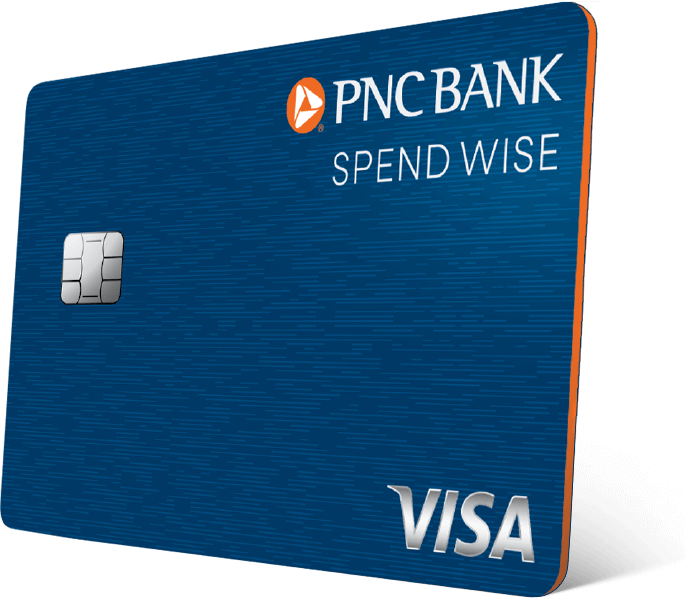

The Purchase APR Reduction Program encourages cardholders to spend wisely and pay on time, leading to the potential for a lower Purchase APR.
The Purchase APR Reduction Program is designed to reward responsible financial behavior for PNC Spend Wise credit cardholders. Customers who qualify can earn a lower purchase APR, helping them manage debt more effectively. Also, by incentivizing timely payments, the program promotes healthier financial habits.
Purchase APR Reduction Program Qualifications
To qualify for a Purchase APR Reduction you must meet the two following requirements:
- Make at least $3,000 in posted net purchases over a 12 billing cycle review period.
- Pay at least the minimum payment due by each due date during your review period.
Please review the FAQs, Key Terms and Examples below for specific questions or real-life examples. If you are a Spend Wise cardholder, you can also review the full program terms and conditions in your Account Agreement.

You are eligible to earn a 2-percentage point reduction to your standard purchase APR. We reduce your standard purchase APR by adjusting your purchase margin.
Each PNC Spend Wise account is reviewed for purchase APR reduction eligibility every review period. The first review period for a PNC Spend Wise credit card account starts with the date of account opening and runs through the last day of the 12th billing cycle following account opening. Subsequent review periods occur every 12 billing cycles thereafter. Please note, if your application is approved and your assigned credit limit is less than $3,000, you may have a harder time meeting the net purchases requirement.
Learn more about Key Terms used in association with the Purchase APR Reduction Program
Important Program Considerations


- Program1
- Program2
- Program3


FAQs
Yes, you have the opportunity to lower your purchase APR on your PNC Spend Wise credit card with our Purchase APR Reduction program.
You can earn a 2 percentage point reduction to your standard purchase APR if you meet the following requirements over a 12 billing cycle review period: (1) post at least $3,000 in net purchases (2) make at least your minimum payment due by each due date over the course of the review period.
We calculate each variable APR by adding a margin (interest percentage) to the value of an index. The index we use is the “Prime Rate” of interest appearing in the “Money Rates” section of The Wall Street Journal published on the 20th day of the month preceding the first day of each billing cycle or, if The Wall Street Journal is not published on such date, the next day on which such Prime Rate is published. This means that your standard purchase APR for a given billing cycle is calculated by adding your standard purchase margin to the Prime Rate then in effect. Any change to the prime rate will result in a corresponding change to your standard Purchase APR.
Yes. If you qualify for a purchase APR reduction, then your standard purchase APR will always reduce two percentage points lower than it would have been had you not qualified for the reduction (except when you’ve already reached the maximum reduction available). That said, occasionally when you qualify for a purchase APR Reduction at a time that coincides with a change to the Prime Rate, your standard purchase APR may not reduce by exactly 2 percentage points compared to the previous billing cycle. For the first billing cycle of the new review period, you may see a reduction to your purchase APR that is greater or less than 2 percentage points compared to the last billing cycle of the previous review period. While your margin will always reduce by 2 percentage points when you qualify for the Purchase APR Reduction, the change to the prime rate will affect the total reduction to your standard Purchase APR. See the “Diana” customer example on this page for an illustration.
No. Some transactions like cash advances and balance transfers do not count towards your $3,000 net purchases requirement. See the definition of "net purchases" within the Key Terms section on this page and your account agreement for additional information.
No. Your PNC Spend Wise credit card may come with an introductory APR for purchases or balance transfers. You also may be offered a promotional APR for certain categories of transactions after you open your account. The Purchase APR Reduction Program will not affect these promotional rates. Additionally, a reduction to your Purchase APR as a result of qualifying for the Purchase APR Reduction will not result in a reduction to any introductory or promotional APRs.
You are not eligible for a Purchase APR Reduction if you fail to make at least the minimum payment due on time for any billing cycle during the review period or if you fail to post at least $3,000 in net purchases during the review period. Additionally, once your standard purchase margin is reduced to 8.74%, you will have achieved the lowest possible Purchase APR on your Spend Wise credit card and will therefore no longer be eligible for a Purchase APR Reduction. Furthermore, your account will not be eligible for a Purchase APR Reduction for a particular review period if your account was placed in a hardship program or other similar special program during the applicable review period.
Customer Examples: See How the APR Reduction Program Works

Customer Example 1: Amelia

Customer Example 2: Fred

Customer Example 3: Diana
- CustomerEx1
- CustomerEx2
- CustomerEx3

Customer Example 1: Amelia

Customer Example 2: Fred

Customer Example 3: Diana
Read Related Articles
Spend
What Is APR on a Credit Card? Understand Your Rates
Learn about APR on a credit card, its types, and how it affects your balance. Get insights to make informed credit decisions and save money.
7 min read
Spend
What is a Balance Transfer and How Do They Work?
A balance transfer moves debt to a new card, often at a lower rate. Learn how it works, its pros and cons, and when it could make sense for you.
10 min read
Spend
Should I Set Up Automatic Payments for My Credit Card?
Wondering if you should set up automatic payments for credit card? Understand the pros, cons, and how it can affect your credit score before deciding.
5 min read