






Refinancing at a longer repayment term may lower your mortgage payment, but may also increase the total interest paid over the life of the loan. Refinancing at a shorter repayment term may increase your mortgage payment, but may lower the total interest paid over the life of the loan. Contact us to discuss the option that best meets your needs.
Cash-Out Refinance
Turn Home Equity Into Funds
What is a Cash-Out Refinance?
When you refinance your mortgage, you may have the option to "cash-out" and turn the equity you've built up in your home into funds you can use to achieve your financial goals.
You'll be replacing your existing mortgage with a new mortgage that comes with a new interest rate and revised loan terms. If the current market interest rate is lower, or your credit score has improved, you may even be able to secure a better interest rate for your new mortgage, in addition to turning your home equity into funds.
In addition to the general benefits of refinancing, you can use the funds with zero restrictions.
Your home still serves as collateral for your new mortgage, so remember that failing to repay the loan under the new terms could still result in foreclosure.

What Can I Use My Cash-Out Refinance For?
You can use the funds for anything you need, with no restrictions.
Here are some common uses:
Home Improvements
Knock out that home improvement project you’ve been putting off, or go all out and completely re-imagine your current home.
- Remodel your kitchen.
- Add on a new garage.
- Put on a new roof.
These types of investments not only can enhance your current living situation, but may also have a positive impact on the overall value of your home.
Debt Consolidation
You may be able to combine your high-cost/high-interest debt into a lower-cost/lower-rate single monthly payment.
- Credit Cards
- Personal Loans
- Lines of Credit
This may help lower your overall interest expenses and may help free up additional funds in your monthly budget.
Large Personal Expenses
Use the funds to pay for any large purchases or to cover ongoing expenses.
- Down payment for a second home, vacation home or investment property.
- School tuition and related costs.
- Starting or improving a business.
What Do I Need To Qualify?
You’ll need to ensure you meet the following requirements:
- Enough equity: We require that you maintain at least 20% in equity in your home in the new transaction, which equates to having an 80% Loan to Value Ratio[1].
- Closing costs: Closing costs can range between 3%-6% of the loan amount. Eligible clients may be able to roll these closing costs into the new refinanced mortgage loan amount and pay nothing out-of-pocket at closing.
- Credit score minimum: Eligible borrowers may be able to qualify with a minimum credit score of 620.
- Debt-to-Income maximum: We compare your total monthly debt payments to your monthly income, called a debt-to-income ratio, to make sure you can handle the new loan payments. Maximum allowable DTI for a cash-out refinance may range from 36%-45% depending on loan type, borrower qualification requirements and other loan characteristics.
- Home appraisal: As part of the Refinance process, you may also need to have a home appraisal completed to verify the value of your home.
What Are the Benefits of Cash-Out Refinancing?
The primary benefit is access to a lump sum of funds that may be used to help achieve your financial goals.

There are some other benefits that could apply depending on your circumstances:
- Compared to other home lending options, you may get a lower interest rate.
- If the money is used to repair or improve your home, the interest may be tax-deductible.[2]
- If you're able to get a lower rate, you may be able to reduce your overall interest expense.
- By customizing your loan terms and/or getting a lower interest rate, you may be able to decrease your monthly payments, freeing up money in your budget.
What Are the Costs & Risks?
You'll need to pay closing costs, which can range from 3%-6% of the loan amount.
Eligible clients may be able to roll these closing costs into the new refinanced mortgage loan amount and pay nothing out-of-pocket at closing.
Some risks include:
- The possibility of foreclosure on your home if the loan is not repaid. This is true of all secured loans that use your home as collateral.
- Your total mortgage debt balance will increase, which may extend the time it takes you to pay off your mortgage.
- If you borrow more than you need, you would pay unnecessary interest expenses.
- If interest rates have increased, your new mortgage loan may come with a higher interest rate. This may increase your overall interest expense and monthly payment.
How Much Can I Take Out?
Many lenders require that you maintain a minimum amount of equity in your home after refinancing, such as 20%, which equates to having an 80% Loan-To-Value Ratio. This means you may be able to borrow up to 80% of your home's appraised value.[1]
For example, imagine your home is worth $500,000 and you owe $225,000. The total equity would be $275,000. If a lender loans up to 80% of the home’s value, your new mortgage could be as much as $400,000 ($500,000 x .8). After paying off the $225,000 balance on the current mortgage, you could potentially cash-out as much as $175,000 (minus closing costs).*
* This example is for illustrative purposes only.

Access Multiple Tools to Manage Your Home Lending Journey
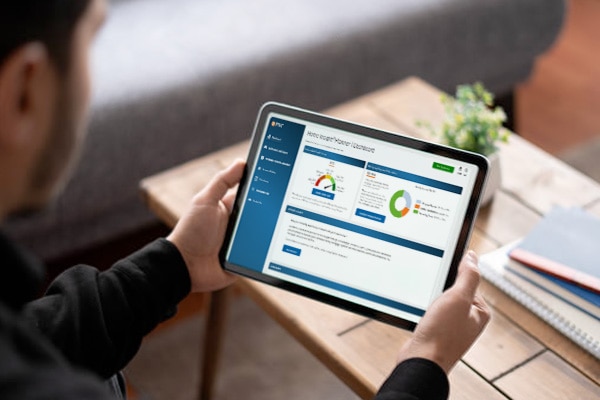
Your home, your goals, your plan
Discover the possibilities and build the right plan for you with Home Insight® Planner
- Explore at your own pace – no need to sign in or share contact information until you're ready
- Compare interest rates, payment estimates, and product options with Scenario Builder
- Check what you can afford – run the numbers with our home lending calculators
- Find your dream home – browse active listings and save your favorites
- Start the online preliminary preapproval,[3] without impacting your credit score.[4]
What Are the Alternatives?
- Rate and Term Refinance
- Home Equity Line of Credit (HELOC)
Change the interest rate, loan terms and/or loan type of your existing mortgage.
Your existing mortgage balance gets paid off and you’ll get a new mortgage in the amount you still owe. Your new mortgage may offer better interest rates and/or provide more favorable loan terms.

Good for you if you don’t have an immediate need for funds to achieve your financial goals, but want to improve the rate and/or terms of your existing mortgage.
How Do I Get Started?

- Confirm you have at least 20% equity built in your home.[1]
- Confirm your credit score is at least 620.
- Confirm your Debt to Income (DTI) meets the maximum DTI requirements which may range from 36%-45%.
- Determine the amount of funds you need to achieve your financial goals.
- Gather the documents you’ll need – refer to our refinance application checklist for more information.
- Connect with a PNC Mortgage Professional or apply online to get started.
Best Mortgage Lender, 2024 by Nerdwallet
January 2024
PNC is proud to be recognized as the 2024 Best Mortgage Lender by NerdWallet in multiple categories:
- First-Time Home Buyers
- FHA Loans
- Jumbo Loans
- Cash-Out Refinancing
- Home Equity Lines of Credit

- First-Time Home Buyers
- FHA Loans
- Jumbo Loans
- Cash-Out Refinancing
- Home Equity Lines of Credit

FAQ
Have Questions?
We're Here to Help
This is assuming that the refinance is for a one-unit primary residence. Maximum LTV can depend on other loan characteristics like loan type and occupancy.
Discuss your options with a tax professional before making decisions based on tax implications.
Final loan approval and amount are subject to verification of loan data, property appraisal and underwriting conditions.
PNC will make one or more soft credit inquires during the digital online preliminary preapproval process, which will not affect your credit score. If you later submit an application, a hard credit inquiry will be made which may affect your credit score.
Debt Consolidation Information: The benefits of a Cash-Out Refinance for debt consolidation depend on your individual circumstances. Because a Cash-Out Refinance may have a longer term than some of the debt you may be consolidating, you may not realize a savings over the entire term of your new Cash-Out Refinance.
Important Notice to Servicemembers and Their Dependents. If you are currently eligible for benefits provided by Servicemembers Civil Relief Act (SCRA), refinancing current debt may not be beneficial.
PNC is a registered service mark of The PNC Financial Services Group, Inc. (“PNC”). All loans are provided by PNC Bank, National Association, a subsidiary of PNC, and are subject to credit approval and property appraisal. Certain restrictions and conditions apply.
©2017-2026 and TM, NerdWallet, Inc. All Rights Reserved.
NerdWallet and the NerdWallet logo are trademarks owned by NerdWallet, Inc. and used with permission.
 ©2026 The PNC Financial Services Group, Inc. All rights reserved.
PNC Bank, National Association. Member FDIC
Read a summary of privacy rights for California residents which outlines the types of information we collect, and how and why we use that information.